Identifying and Leveraging Strengths
This post is straight from the book The Inclusive Manager it inverts the usual managerial gaze. Instead of asking what is wrong and how to fix it, we ask what is strong and how to use it, and for neurodivergent employees especially, that inversion changes careers.
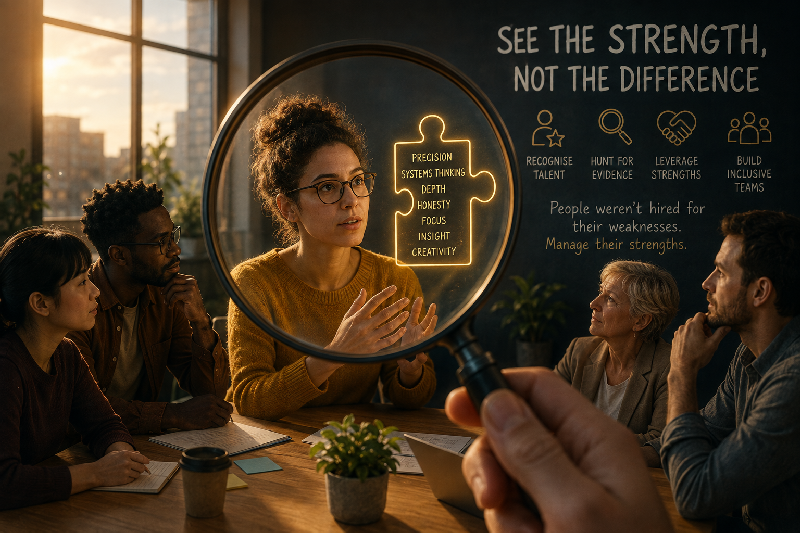
Recognising Individual Talents
Strengths hide in plain sight, and they hide best behind the very differences that attract managerial concern.
The colleague who asks relentless clarifying questions is displaying precision. The one who cannot bear a sloppy process is displaying systems thinking. The one who hyper-focuses past lunch is displaying depth. The one who blurts the uncomfortable truth in the project review is displaying honesty your project badly needs.
Before you can leverage a strength you must learn to see it, especially when it arrives in unfamiliar packaging.
Hunt for Evidence, Not Impressions
Impressions of talent are contaminated by confidence, polish, and similarity to yourself, three things that vary enormously across neurotypes and correlate poorly with actual ability.
So hunt evidence instead.
Where does this person’s work draw the fewest corrections? What do colleagues quietly bring them to check? On which tasks does their energy visibly rise? What did they do during the last crisis?
Keep a strengths note per team member alongside the evidence file Chapter 7 will formalise, and add to it deliberately.
Ask the person too, though gently, since many neurodivergent adults have had their strengths dismissed for so long they struggle to name them.
What work makes time disappear for you?
is a kinder and more revealing question than:
What are you good at?
The difference matters. Inclusive management is not about lowering standards or ignoring weaknesses. It is about understanding the person properly, recognising where they can contribute most effectively, and creating an environment where their strengths can become an asset to the whole team.
The Inclusive Manager explores practical approaches to inclusive leadership, neurodiversity, individual strengths and creating workplaces where different ways of thinking can become a genuine organisational advantage.
Available in paperback and Kindle on Amazon.
Diversity is being invited to the party; inclusion is being asked to dance.
— Verna Myers

Leave a Comment